

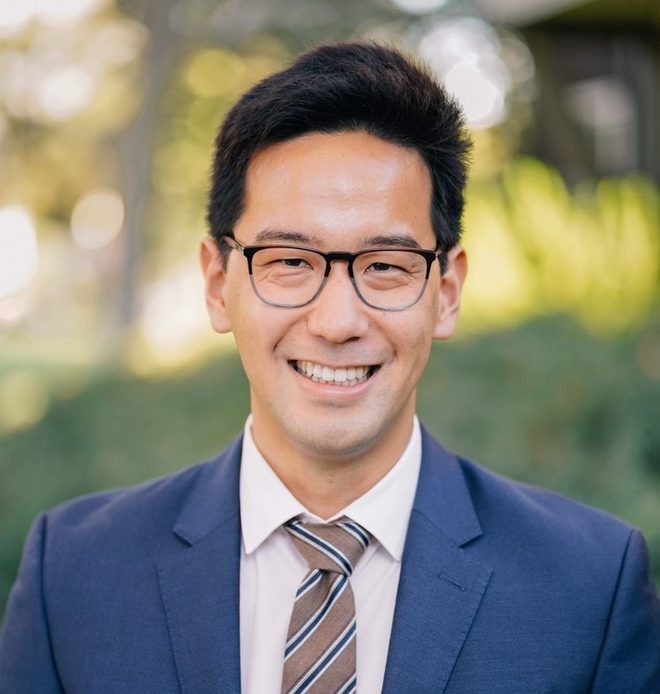
Shotaro Nishimura Nakamura, PhD, Professor of Agricultural Economics at Penn State University, will present the EEEP Seminar Series, “Monetary and Non-monetary Barriers to Accessing Environmental Public Benefit Programs: Experimental Evidence from California” on September 25, 2026.
Abstract:
Exposure to air pollution and take-up of defensive investments vary widely by socioeconomic status. Public benefit programs, such as subsidized air purifiers, can address these disparities, but administrative “ordeal” costs may screen out the very households they target. We conduct a randomized controlled trial with approximately 90,000 California households, mailing letters inviting residents to apply for a subsidized portable air purifier, while experimentally varying the subsidy rate (0–100%) and ordeal costs (a longer application form and a proof-of-residence requirement). Applications peak at roughly 2% with a full subsidy and short form. Application rate is non-linear in price: the arc elasticity of application is −0.53 between 75% and 95% subsidies but −1.35 between 50% and 75%. A longer form reduces applications by 20% and proof of residence by 25%, with suggestive evidence of larger deterrence among disadvantaged households. Streamlined, highly subsidized programs maximize take-up, while ordeal costs are unlikely to improve targeting toward vulnerable populations.
Bio:
Shotaro Nakamura is an Assistant Professor of Agricultural Economics in the Department of Agricultural Economics, Sociology, and Education at Pennsylvania State University. He received his Ph.D. in Economics from the University of California, Davis. He is interested in the demand for environmental goods and services in both developed and developing-economy contexts. He studies how information and policy interventions help address frictions and failures in markets for tools to defend individuals against environmental degradation.