

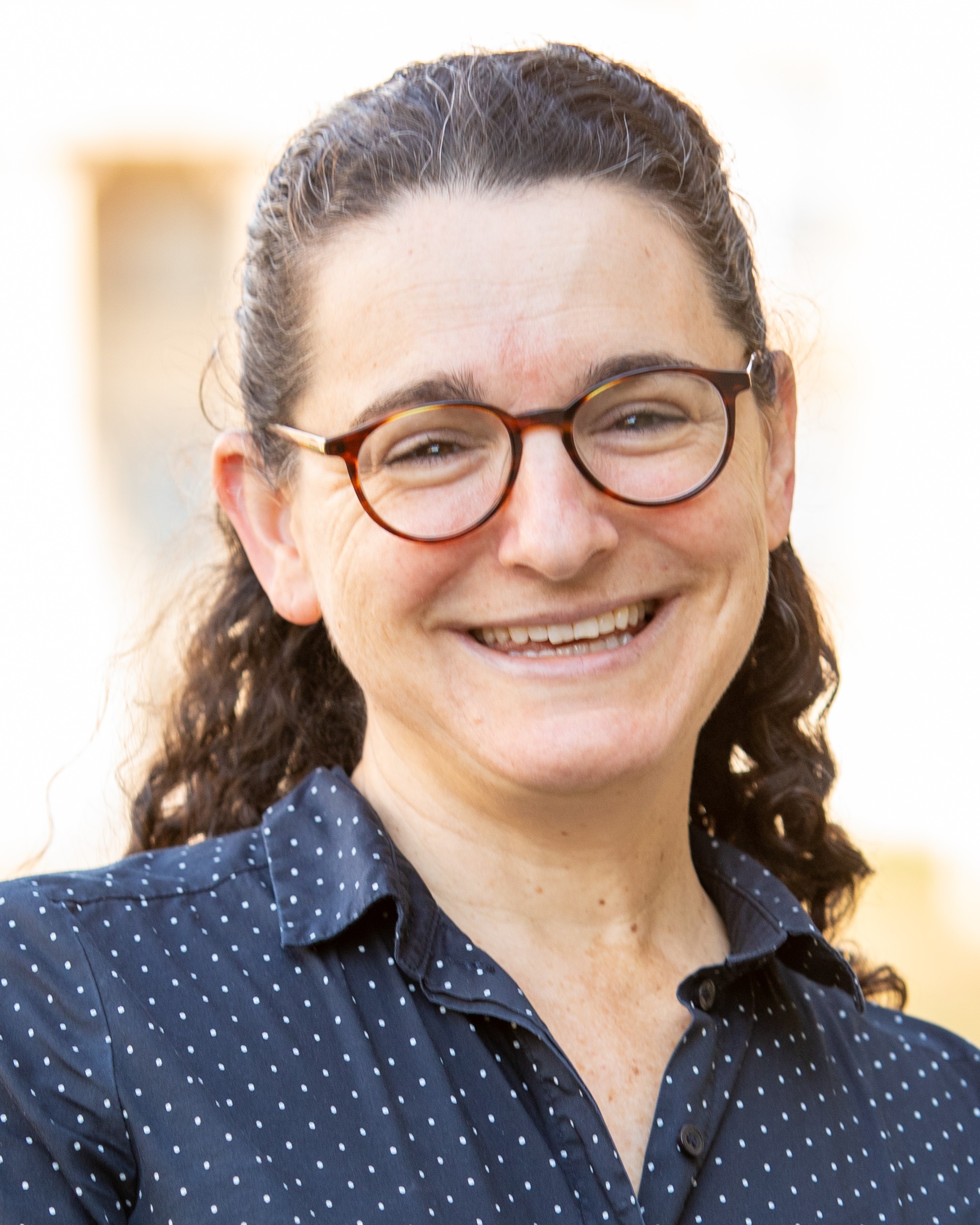
Laura Schechter, PhD, Professor of Economics at the University of Wisconsin-Madison, will present the EEEP Seminar Series, “Imperfect Competition and Sanitation: Evidence from Randomized Auctions in Senegal” on December 10, 2025.
Abstract:
Laura studies the extent to which collusion can explain the under-provision of clean sanitation technologies in developing countries. Using latrine desludging services in Dakar as a case-study, she documents that prices are 40% lower in competitive areas than in areas where prices are coordinated by a trade association. She then develops an experimental just-in-time auction platform with random variation in several design features to formally test for collusive conduct and estimate the welfare costs of imperfect competition. Consistent with the collusion hypothesis, she finds that bidders systematically avoid competition by placing round focal bids and refraining from undercutting rivals. She uses a K-means clustering algorithm to classify bidders as competitive or non-competitive and simulate counterfactuals in which non-competitive bidders are replaced with competitive bidders. This would significantly increase take-up of the improved sanitation technology, with back-of-the-envelope calculations suggesting increased competition would improve health by a half to a quarter as much as the expected effect of building improved sewerage systems–an often prohibitively expensive and demanding undertaking.
Bio:
Laura Schechter is Vilas Distinguished Achievement Professor of Economics at UW Madison. Before that, she was Olav F. and Elsie de Noyer Anderson-Bascom Professor of Agricultural and Applied Economics at UW Madison. She is associate editor at the Economic Journal. In 2022, Laura finished a six-year term as co-editor at Journal of Economic Behavior and Organization, and in 2019, she finished a three-year term as associate editor at the American Journal of Agricultural Economics. Her work has been covered by NPR’s Planet Money and has been funded by the NSF, IFPRI, PEDL, and ATAI, among others. Her work has been published in top general interest economics journals such as Econometrica, American Economic Review, and the Economic Journal, as well as in top agricultural economics journals such as American Journal of Agricultural Economics and Applied Economic Perspectives and Policy, and in top development economics journals such as Journal of Development Economics. Laura has also won graduate teaching awards, undergraduate teaching awards, and mentoring awards. Laura’s work uses experimental methods and causal econometric analysis to study topics related to reciprocity and trust, vote buying, sanitation, and technology adoption.